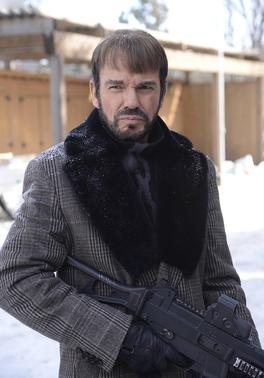
When FX announced its ambitious television adaptation of the Coen Brothers' iconic 1996 film, "Fargo," expectations were sky-high. The pressure to live up to such a cinematic pedigree was immense, yet the series quickly carved its own distinct, chilling niche. A significant factor in its immediate success and critical acclaim was the masterful casting of big-screen veteran Billy Bob Thornton as the enigmatic, chillingly charismatic hitman, Lorne Malvo. Thornton’s portrayal not only anchored the inaugural season but delivered a villain so unique and unsettling that he etched himself into the annals of television history.
Thornton's decision to "take the TV plunge," as it was often described, mirrored a growing trend among respected film actors seeking complex, serialized narratives on the small screen. Much like Matthew McConaughey and Woody Harrelson in "True Detective" or Kevin Spacey in "House of Cards," Thornton brought a gravitas and depth typically reserved for feature films. His presence instantly gave the FX series a formidable boost, signaling that this "Fargo" wasn't merely a nostalgic cash-in but a serious dramatic undertaking worthy of attention.
The Genesis of a Monster: Unpacking Lorne Malvo's Chilling Persona
From his very first scene, Lorne Malvo establishes himself as an agent of chaos, a force of nature whose motives are as murky as the frozen Minnesota landscape. Showrunner Noah Hawley, who brilliantly envisioned "Fargo" not as a remake but as a new, self-contained story sharing the film's "vibe," created a character that was, in Thornton's own words, "conscienceless." Yet, Malvo is far more than just a typical criminal; he is a philosophical tormentor, a man who delights in dismantling the polite, rigid societal structures he encounters. This idea resonates deeply with the Coen Brothers' original description of the region as "Siberia with family restaurants" and Hawley's insight that "polite societies are often the most violent because people don’t bend, they just break." Malvo's primary objective isn't merely to commit crimes for profit, but to meticulously, almost artistically, break people.
Thornton's approach to playing Malvo was unconventional, reflecting the character's own mysterious nature. He deliberately avoided constructing an elaborate backstory, surmising that Malvo himself probably wouldn't dwell on his past. This choice allowed the actor to focus purely on the present moment, imbuing Malvo with an unpredictable, almost primal energy. The genius of Hawley's tightly written script meant that Thornton felt he primarily needed to "show up," but his presence brought an undeniable depth that transcended the page.
What truly sets Malvo apart is his "bizarre sense of humor," a dark, twisted amusement he derives from "messing with people." While most criminals seek to achieve their objectives with efficiency, Malvo savors the psychological game. Imagine a thief who, instead of just grabbing the money, pauses to critique a store clerk's fashion choices – "Why are you wearing that sweater?" – purely to unsettle them. This manipulative delight in pushing boundaries and sowing discord is Malvo's signature. He's not just a killer; he's a psychological arsonist, igniting dormant malevolence in others and watching the fires burn.
The Accidental Iconography: Thornton's Contributions to Malvo's Look
Beyond the internal portrayal, Billy Bob Thornton's Fargo performance is inseparable from Malvo's distinctive external appearance. One of the most iconic elements of Malvo's look – his peculiar, blunt bangs – was, surprisingly, an accident. What started as a "bad haircut" during pre-production, intended to be dyed and integrated into a different aesthetic, became a stroke of creative genius when Thornton chose to embrace it.
Instead of fixing the unintentional bangs, Thornton saw an opportunity. He looked in the mirror and thought, "Hang on a second here, this is like 1967 L.A. rock. I could be the bass player of the Buffalo Springfield. This is good." He also mused that it evoked "the dark side of Ken Burns." The unexpected juxtaposition of those innocent-looking bangs with Malvo's utterly ruthless and depraved nature created a deeply unsettling visual irony. Bangs are often associated with youth and naivety, making them a perfect counterpoint to Malvo's ancient, predatory evil. This choice, stemming from an on-set happenstance, is a testament to Thornton's improvisational skill and keen eye for character detail, demonstrating how an actor can contribute significantly to a role even when the script is perfect.
Malvo's entire demeanor, from his measured gait to his chillingly calm delivery, is meticulously crafted. The physical choices made by Thornton elevate the character from a mere hitman to an almost mythical, predatory figure within the snow-covered landscape of Bemidji. This level of dedication and nuanced performance is precisely why A-list talent like Thornton is drawn to the expanded opportunities of television. For a deeper dive into this phenomenon, explore Billy Bob Thornton's Fargo Plunge: Why Film Stars Go TV.
Why Fargo Resonates: Honoring a Fabled Pedigree
The success of the "Fargo" series, particularly its first season spearheaded by Billy Bob Thornton, lies in its ability to honor the Coen Brothers' "fabled pedigree" while forging its own identity. Noah Hawley understood that directly remaking the film would be a disservice. Instead, he channeled the original's core essence: the darkly comedic tone, the juxtaposition of mundane evil against stark beauty, and the profound human folly that unfolds when desperation meets malevolence.
Thornton himself, having worked with the Coen Brothers, recognized that the FX continuation lived up to the high standards set by the original. The series manages to capture the idiosyncratic dialogue, the precise pacing, and the moral ambiguities that define the "Fargo" universe. Characters like Malvo embody the idea that the true wilderness isn't just the physical environment, but the darkness that can emerge within seemingly ordinary individuals when confronted with an external, catalytic force of evil. The meticulous world-building and character development offered by a 10-episode format allowed for a richness that film often cannot accommodate, providing actors like Thornton ample space to explore the intricacies of their roles. For more on this, check out Fargo TV Series: Billy Bob Thornton on Honoring Coen Pedigree.
The series excels in maintaining that delicate balance between grim violence and absurd humor, a hallmark of the Coen Brothers' style. Malvo, with his detached cruelty and unsettling wit, is the perfect embodiment of this unique tone, serving as both a terrifying antagonist and a strangely captivating figure.
Conclusion: Malvo's Enduring Legacy in the World of TV Villains
Billy Bob Thornton's Fargo performance as Lorne Malvo remains a towering achievement in modern television. He crafted a villain who was not only terrifying but also intellectually fascinating, a true force of chaos who found joy in psychological warfare. Malvo's indelible impact stems from Thornton's disciplined, instinctual acting, combined with Hawley's brilliant writing and the series' faithful yet innovative embrace of the "Fargo" spirit. From an accidental haircut becoming a character cornerstone to a conscienceless man with a bizarre sense of humor, Malvo redefined what a television antagonist could be, leaving audiences both repulsed and utterly captivated. His legacy continues to influence how complex villains are written and portrayed, solidifying Thornton's place in the pantheon of television's most memorable characters.